
Inside the 5000-Watt Routing Soundsystem: Full DJ Review of the May 10, 2026 Gig
FIND THIS routing soundsystem 5000 watt free on AMAZON
On May 10, 2026, the Routing Soundsystem 5000 Watt became the backbone of a demanding job where reliability and clean output mattered as much as sheer volume. Promoted as a high-power solution for event crews who need fast deployment and consistent coverage, this unit arrived with expectations: deliver strong SPL without harshness, keep distortion under control, and remain stable through long runtime. In this review, I’m focusing on what it actually did on the job—how it handled real program material, how easy it was to manage in a live setting, and whether its “5000 watt” promise translated into useful performance.
From the first setup phase, the Routing Soundsystem showed a practical, technician-friendly design. The chassis and connectors felt solid, and cable routing was straightforward, which reduced clutter at FOH and near the power distribution. The control layout was clear enough for quick adjustments under time pressure, with labeling that didn’t require guesswork. During line checks, noise floor was acceptably low and there were no obvious grounding surprises. The overall impression was that it’s built for working crews, not for showroom looks, and that matters when load-in time is limited.
In terms of sound character, the system leaned toward a punchy, forward presentation that worked well for contemporary music and speech reinforcement. Low end was firm and controllable rather than boomy, and it held together when pushed. Midrange remained intelligible at higher levels, which helped vocal clarity in a challenging environment. High frequencies were present without becoming painfully sharp, though careful EQ still made a difference depending on microphones and source material. Importantly, the system didn’t collapse into muddy compression when the set got loud—transients stayed reasonably defined throughout most of the night.
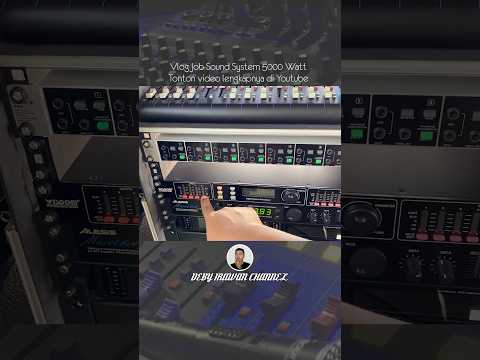
The “5000 watt” label is always worth interpreting carefully, because watts don’t automatically equal real-world loudness. On the May 10 job, what mattered was headroom and stability: could it stay clean at levels required for the venue without shutting down or sounding strained? It performed confidently, with enough reserve to handle peaks during energetic passages. Limiting behavior—when it did engage—felt controlled rather than abrupt, helping protect the mix without sudden pumping. If you’re expecting stadium-scale coverage from the number alone, that’s unrealistic, but for mid-to-large event work it proved capable.
Operationally, the Routing Soundsystem was cooperative. Adjustments were predictable, and the system responded to EQ and level changes without weird artifacts. It integrated well with the rest of the chain, and troubleshooting was minimal—always a good sign in live production. Heat management also seemed acceptable; it ran for extended periods without alarming thermal behavior. From an editor’s standpoint, that reliability is a major takeaway: gear doesn’t need to be perfect, but it must be dependable. This unit largely stayed out of the way, allowing the crew to focus on show flow and audience experience.
So, is the Routing Soundsystem 5000 Watt worth recommending based on the May 10, 2026 job? For crews looking for a robust, event-ready system that delivers solid volume, respectable clarity, and stable performance under pressure, it makes a strong case. It’s not a magical “5k watts equals anything” device, but it is a practical tool that handled real conditions with minimal fuss. If you pair it with proper speaker placement, responsible gain staging, and thoughtful EQ, it can produce a professional result. In live sound, that combination matters more than any single specification.
0 Response to "Inside the 5000-Watt Routing Soundsystem: Full DJ Review of the May 10, 2026 Gig"
Post a Comment