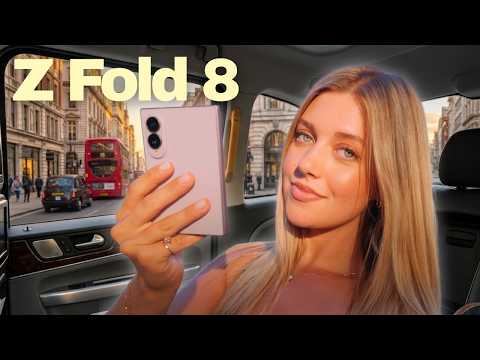
The Samsung Galaxy Z Fold 8 feels less like a phone you “use” and more like a device you live with. For this day-in-the-life review, I spent a full day relying on it for everything: morning planning, navigation across London, shooting photos and video, quick admin tasks, and late-night edits before bed. The Fold 8’s core promise is simple—carry a phone that can become a tablet when you need space. The question is whether that promise holds up through real routines, not lab tests or spec sheets. After a full day, it’s clear the experience is about flexibility, speed, and small moments where the big screen quietly changes your habits.
My morning started with coffee and a scroll through news, email, and calendar. On the cover display, the Fold 8 behaves like a premium candybar phone—easy to use one-handed, bright enough for window-side glare, and quick to wake. But the first “Fold moment” came when I opened it to review my day: seeing my calendar in a tablet-like view made planning feel more deliberate. Multitasking is where it shines. I kept a to-do list on one side and my inbox on the other, dragging details between apps without feeling cramped. Even simple tasks like comparing a booking confirmation to a map location felt faster when I didn’t have to constantly app-switch or zoom.
Heading out into London, the Fold 8 became my navigator, notebook, and camera. On the move, the cover display is the practical choice—quick glances at directions, tapping to reroute, answering messages. When I stopped to plan the next leg of the day, opening the device gave me a broader view of the city grid and transit options, which made route decisions easier. I also appreciated how reading articles or guides on the inner display feels closer to a small tablet experience; you naturally slow down and actually take in the information. The hinge feels confident in use, and the device balances well enough for quick checks while walking.
The camera experience fits the Fold lifestyle: flexible angles, fast capture, and the option to use the phone partially folded to stabilize shots. I took street photos, a few architectural details, and some quick clips. Switching between the cover and inner display helps in different ways—cover for speed, inner display for reviewing composition and details. In bright daylight, the screen makes it easy to check exposure and sharpness without squinting. The Fold 8 also encourages more deliberate editing on the go; you’re more likely to crop, straighten, and adjust right after shooting because the canvas makes it comfortable. It’s not just about taking photos, but actually finishing them.
Afternoon use is where a foldable either becomes essential or starts to feel like a novelty. For me, the Fold 8 stayed useful. I handled messages, quick document checks, and a bit of web research while moving between locations. The inner screen made it easier to read longer paragraphs and scan multiple sources without losing my place. Split-screen multitasking is genuinely practical: one pane for notes, another for a browser, and sometimes a third floating window for chat. Instead of pausing to “do phone tasks,” I found myself doing them in between moments—on a bench, on a platform, during a quick break—because the device makes those tasks feel less tedious.
As evening came in, battery anxiety is always the question with a day of mixed use. With typical habits—navigation, camera use, messaging, browsing, and periodic multitasking—the Fold 8 held up well enough to carry me into the night without constant worry, though heavy video capture and maximum brightness will always drain faster. Back at home, I leaned into the Fold 8’s strength: late-night edits. Reviewing footage and photos on the inner display feels closer to editing on a small tablet, and that changes the workflow. Timelines are easier to scrub, details are clearer, and you’re less likely to miss small issues that slip by on smaller screens.
By the end of the day, the Samsung Galaxy Z Fold 8 proved its value not through one headline feature, but through dozens of small improvements to daily friction. It’s a phone when you need quick access, and a bigger workspace when you want to focus. The best part is how naturally it fits into different contexts—commuting, exploring, creating, and finishing work late at night. If your day includes reading, planning, multitasking, or editing on the go, the Fold 8 doesn’t just keep up; it subtly changes how you use a phone. It makes the day feel smoother, more organized, and more complete.
0 Response to "Samsung Galaxy Z Fold 8: A Full Day of Real-World Use — What Surprised Me Most (And What Didn’t)"

0 Response to "Samsung Galaxy Z Fold 8: A Full Day of Real-World Use — What Surprised Me Most (And What Didn’t)"
Post a Comment