
What I Didn’t Expect From the RTX Spark: An Unsponsored Review That Left Me Wanting Much, Much More
Wednesday, October 28, 2026
review,
This wasn't what I had hoped for... RTX Spark Unsponsored Review
FIND THIS (RTX Spark) free on AMAZON
When NVIDIA latches the RTX banner onto a new product, expectations tend to swing toward performance and spectacle. The promise is clear: ray tracing, AI-driven upscaling, and a dash of future-proofing wrapped in a gaming-centric veneer. This article, a Spark unsponsored review, asks a humbler question: does the label translate into real-world delight or merely brand recognition? My aim is to separate bravado from measurable gain, to test power efficiency, driver stability, and practical usefulness for everyday play. We’ll look beyond glossy launch pages and charts into the rhythm of real sessions, where stuttering frames and voice chat glitches too. First impressions often hinge on packaging and software polish, but this assessment digs deeper. The RTX Spark hardware carries a familiar silhouette, which may reassure longtime fans while challenging newcomers to understand its niche. We tested a mix of esports dailies, open-world wanderings, and creative workloads to measure fanfare against friction. Power draw mattered as much as frame pacing, because a product that sips watts while quiet and cool earns trust quickly. In some scenes, performance felt brisk and confident, yet the balance occasionally tilted toward aggressive power bursts that collapsed once thermal ceilings crept in during extended gaming sessions. As a reviewer, I also considered the software ecosystem around RTX Spark. Drivers should feel mature, not provisional; firmware updates must resolve nagging issues rather than introduce new ones. The control panel presents options that matter to gamers—ray-trace quality, DLSS scaling, sharpening, and motion smoothing—yet some sliders behave inconsistently across titles. We encountered occasional micro-stutters, texture pop-in, and a few driver-induced crashes during a testing week that was otherwise stable. These hiccups remind us that the best hardware can still be let down by poor software orchestration and uneven game support. The experience improved with careful driver tunings and reboots.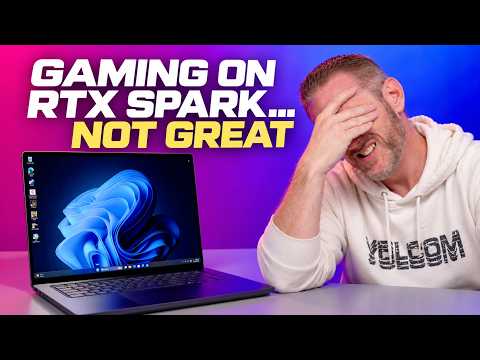
0 Response to "What I Didn’t Expect From the RTX Spark: An Unsponsored Review That Left Me Wanting Much, Much More"
Post a Comment